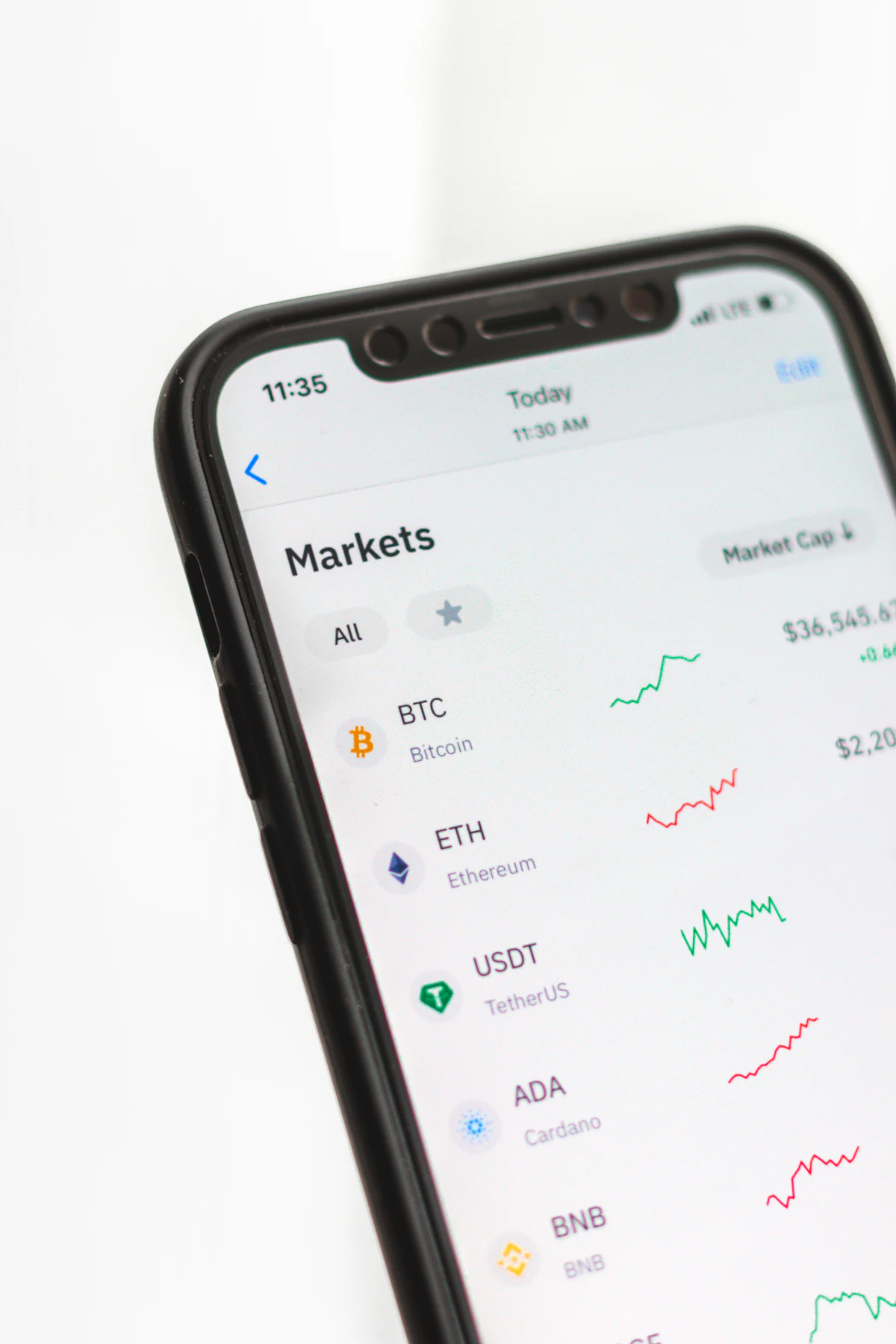
Crypto sentiment tools can help traders and researchers track how people discuss digital assets, how narratives change, and whether public attention is moving alongside market activity. But the phrase AI crypto trading tools covers several different products: social analytics, on-chain metrics, news sentiment, and broad market-mood indexes do not measure the same thing.
Choosing a tool begins with the question you need to answer. Do you need to compare social attention across coins, examine network activity, summarize financial news, or add a simple market-wide sentiment indicator to a dashboard? A platform designed for one of these jobs may be a poor fit for another.
This guide compares five options by their documented data focus, access model, cost information, and limitations. It is a source-based comparison of publicly available product documentation, not a hands-on benchmark or a ranking of trading performance. Product plans and limits can change, so verify the linked provider pages before purchasing.
Quick comparison
| Tool | Main use | Access and published pricing | Important distinction |
|---|---|---|---|
| LunarCrush | Social activity, sentiment, creators, and narratives | Free account with limited Discover features; paid plans listed from $90/month | Social-first analytics with API and AI-workflow integrations |
| Santiment | On-chain, social, development, and market metrics | Free plan; Sanbase Pro listed at $49/month; Sanbase Max at $249/month | Broader analytics; API access and data freshness vary by plan |
| Perception | Sentiment derived from media and research coverage | Free MCP access with five credits per day; authenticated REST access is part of its paid Advisory offering | Media sentiment and historical index, not simply social engagement |
| Alternative.me Fear & Greed Index | A broad crypto-market mood indicator | Public index and API | Market-wide context, not a per-coin social analytics platform |
| CoinMarketCap API | Market data and selected sentiment/index endpoints | Selected keyless public endpoints; higher limits and more endpoints via an API key | Useful for market context; its Fear and Greed metric is not a substitute for granular social analysis |
Price note: prices and plan details below were checked on 13 October 2026. They are snapshots from provider pages, not price guarantees. Check the official links for current restrictions, billing terms and eligibility.
First, understand the types of sentiment data
Social sentiment and attention
Social analytics tools process signals such as post volume, interactions, topics, creators and the tone assigned to online discussion. They can help answer questions such as whether attention to a token is rising or which narratives are becoming more visible. Social activity is not the same as buying pressure: posts can be promotional, coordinated, repetitive or generated by bots.
On-chain and behavioral metrics
On-chain analytics examine activity recorded on supported networks, such as transfers, balances, address behavior or network usage. Some platforms combine these metrics with social and market data. That can add context to a sentiment reading, but on-chain activity does not reveal the motive behind every transaction, and wallet labels can be incomplete or uncertain.
News and media sentiment
Media-sentiment systems analyze coverage from sources such as news outlets, research, podcasts, filings and, depending on the provider, social platforms. They are useful when a researcher wants to follow the tone or volume of coverage over time. Their output depends on source selection, classification methods and update frequency.
Market-wide sentiment indicators
Fear-and-greed indexes condense a defined set of market or public-attention measures into a single indicator. They are convenient as a broad context variable, but they generally do not explain which individual asset is attracting attention or why.
The important buying question is therefore not simply “Which tool uses AI?” It is “Which data does this tool measure, how was that output produced, and does it answer my actual research question?”
1. LunarCrush: social metrics and attention across assets
LunarCrush's official developer documentation describes an API for social sentiment, mention and engagement volume, creators, topics, trending data, and market metrics for crypto and stocks. The API uses HTTPS and bearer-token authentication, and the service also offers integrations for AI assistants and MCP-compatible workflows.
Consider it when: you want a social-first view that combines attention, sentiment and creator or topic information, or when you want to connect social metrics to a research script or AI-assisted workflow.
What to check: confirm that the plan exposes the exact endpoints and history you need. The provider lists Light at $90 per month, Medium at $300 per month and Heavy at $900 per month, with different request limits. Its pricing page also describes limited social-sentiment exploration through Discover on a free account, while its developer page says the free Hobby API tier is restricted to market-data endpoints. In other words, do not assume the free API includes the same social data as paid plans.
Limitation: social measures can be noisy. A sharp increase in mentions could reflect genuine interest, a coordinated campaign, controversy or spam. Compare attention with source quality, market activity and the original posts rather than treating a score as an instruction to buy or sell.
Official sources: LunarCrush pricing and LunarCrush developer documentation.
2. Santiment: combine social, on-chain and development metrics
Santiment offers crypto analytics around on-chain activity, social trends, development metrics and market data. It can be a better fit than a social-only tool when the research question needs several kinds of context—for example, checking whether a rise in public attention coincides with changes in network activity.
Consider it when: you want to explore asset-level metrics, use historical observations, build alerts, or connect analytical data to a more structured research workflow.
Published plan details: the pricing page lists a free Sanbase plan with a 30-day lag, Sanbase Pro at $49 per month and Sanbase Max at $249 per month. The page says Max is intended for users requiring full API access to real-time data without restrictions or time lag. The availability of a particular metric, historical window or API feature still depends on the product and plan, so check those details before designing a system around them.
Limitation: combining many metrics does not automatically create a better signal. Measures may be correlated, incomplete, or available on different time schedules. If you are testing whether a metric helps explain later market behavior, record its publication time and avoid accidentally using data that was not available at the decision time.
Official sources: Santiment pricing and Santiment API plan documentation.
3. Perception: research and media sentiment
Perception's crypto sentiment API page describes an index updated every 15 minutes and records dating back to 2011. The provider says its data includes media, podcasts, filings and X, with related sentiment and narrative information. It also offers a public index endpoint and MCP access for use with AI clients.
Consider it when: your research depends on the tone and volume of news and other published material rather than social engagement alone, or when you want sentiment records available to an AI-assisted research workflow.
Access model: the page lists five free MCP credits per day without a card. Authenticated REST access is included with the paid Perception Advisory offering; a simple universal self-serve REST price is not clearly stated on the referenced page, so contact the provider or verify the current offer if API access is essential.
Limitation: a sentiment index is a summary of a selected source set, not a direct estimate of a token's fair value. Read the methodology and check which sources and dates contributed to the result. A stable update schedule does not guarantee that every asset or event is covered equally.
Official source: Perception crypto sentiment API.
4. Alternative.me: a simple market-wide sentiment baseline
The Alternative.me Fear & Greed Index is a useful reference when you need an accessible measure of broad crypto-market mood. Alternative.me publishes an API endpoint at https://api.alternative.me/fng/ and documents parameters for retrieving recent or historical index values.
Consider it when: you want a simple baseline for a chart, research notebook, or market-context panel without purchasing a large analytics suite.
Important limitation: this is a market-wide indicator, not a detailed comparison of sentiment for every individual token. It should not be described as a complete AI trading system or as proof that prices will reverse when the index reaches an extreme.
Commercial-use condition: Alternative.me explicitly says users must acknowledge the source prominently and place attribution next to displayed data for commercial use. Check its current terms before incorporating the index into a monetized product or public-facing dashboard.
Official source: Alternative.me Fear & Greed Index and API rules.
5. CoinMarketCap API: market context and index data
CoinMarketCap's Keyless Public API documentation describes selected public endpoints that can be called without an API key, including market data and proprietary indexes. Other endpoints, higher rate limits and a wider catalog may require a key or a different plan.
Consider it when: you are building a simple market-data context layer and want to explore accessible price, market-cap or index data before committing to a larger integration.
How it differs from social analytics: a market-wide Fear and Greed value can help describe overall context, but it is not the same as measuring individual posts, sentiment by coin, or who is driving a narrative. Do not compare index scores from different providers as if they were generated from the same methodology.
Limitation: keyless access is rate-limited and supports only selected endpoints. Confirm the exact endpoint, refresh cadence, request limits and permissions before relying on it for a scheduled or commercial application.
Official sources: CoinMarketCap Keyless Public API and Fear and Greed API reference.
How to choose the right tool for your workflow
Use these questions to narrow the options before paying for a subscription.
- What do you need to observe?. Social attention, news sentiment, on-chain behavior and market-wide mood are different data types. Choose the provider that documents the data behind your question.
- Do you need individual-asset coverage?. A market-wide index can add context, but it cannot replace per-coin metrics when your research compares tokens.
- Will you use a dashboard, spreadsheet, API or AI assistant?. Check the exact interface included in the plan. “AI compatible” does not automatically mean every endpoint is available through an API or MCP connection.
- How current must the data be?. Compare update frequency, historical availability, delays, timestamps and endpoint-specific limits. A real-time subscription is not necessarily real-time for every metric.
- Can you reproduce the output?. Prefer documentation that describes the metric, inputs, timestamps and limitations. Save observations with their retrieval time if you plan to test a rule historically.
- What do commercial terms allow?. Confirm whether you may store, display, redistribute or use the data in a paid product. A subscription to view a dashboard does not necessarily grant redistribution rights.
- Is the price proportionate to the task?. Start with the smallest plan that exposes the necessary features. A more expensive tool is not automatically better for a narrowly defined research question.
How to evaluate a sentiment signal before using it
Do not judge a sentiment tool only by whether its dashboard looks convincing. Define the research question in advance. For example: “Does a change in the chosen sentiment metric contain information about the next day's return after fees and realistic execution assumptions?” That question can be tested; “Does this tool find winners?” is too vague.
Record the precise metric, source, timestamp, asset universe and observation window. Avoid look-ahead bias by ensuring that each observation could actually have been retrieved at the time the hypothetical decision was made. Compare results with a simple baseline, account for repeated testing, and evaluate across more than one market period. A correlation between attention and price movement does not prove that sentiment caused the move or that the relationship will persist.
Also look for coverage problems. If a platform changes its source list or scoring method, older and newer observations may not be directly comparable. Missing posts, spam filtering, language differences, token-name ambiguity and low-liquidity assets can all affect results. Where the vendor does not document a method sufficiently, state that limitation instead of treating its score as independently verified.
Common mistakes when choosing AI crypto trading tools
- Treating sentiment as a trade signal by itself. A bullish label does not establish fair value, entry timing, liquidity or downside risk.
- Confusing popularity with information. Higher social volume may mean greater attention, not better information or future returns.
- Mixing incompatible metrics. Two providers' scores may have different sources, scales and update schedules.
- Ignoring delay and historical access. A free plan may be adequate for exploration but unsuitable for a time-sensitive test or a production workflow.
- Overlooking data rights. Public availability does not automatically grant permission for unrestricted commercial display or redistribution.
- Assuming AI removes the need for review. Models can misclassify sarcasm, repeat unsupported claims or summarize noisy data with unjustified confidence.
Which option should you start with?
For social engagement and coin-level attention, investigate LunarCrush first. For research that combines social, on-chain and development indicators, compare the relevant Santiment metrics and plan restrictions. For media-focused sentiment and an index with historical coverage, examine Perception's methodology and access model. For a low-friction market-wide baseline, consider Alternative.me or CoinMarketCap's available index endpoints, while respecting their respective terms and limits.
These are use-case matches based on public documentation, not an independently tested performance ranking. Start with the smallest workflow that can answer your question, validate the data yourself, and expand only when the benefit is demonstrated.
AI crypto trading tools can make large streams of information easier to organize, but they cannot turn uncertain data into certainty. Treat sentiment as one input to a documented research process, not a promise of profitable trades.
For related reading, see our guide to AI Crypto Trading, our overview of Evaluating Crypto Trading Platforms, and our guide to AI Trading Research and Market Analysis.
Trading and investing involve risk. This article is for general educational purposes only and is not financial or investment advice. Product information was reviewed on 13 October 2026; confirm current details with each provider before making decisions.
Sources and review date
LunarCrush pricing and developer documentation
Santiment pricing and API plan documentation
Perception crypto sentiment API
Alternative.me Fear & Greed Index and API terms
CoinMarketCap Keyless Public API and global metrics API reference
Information checked: 13 October 2026. This is a document-based comparison of public vendor descriptions. No paid product was independently benchmarked, and no tool is endorsed based on trading performance.